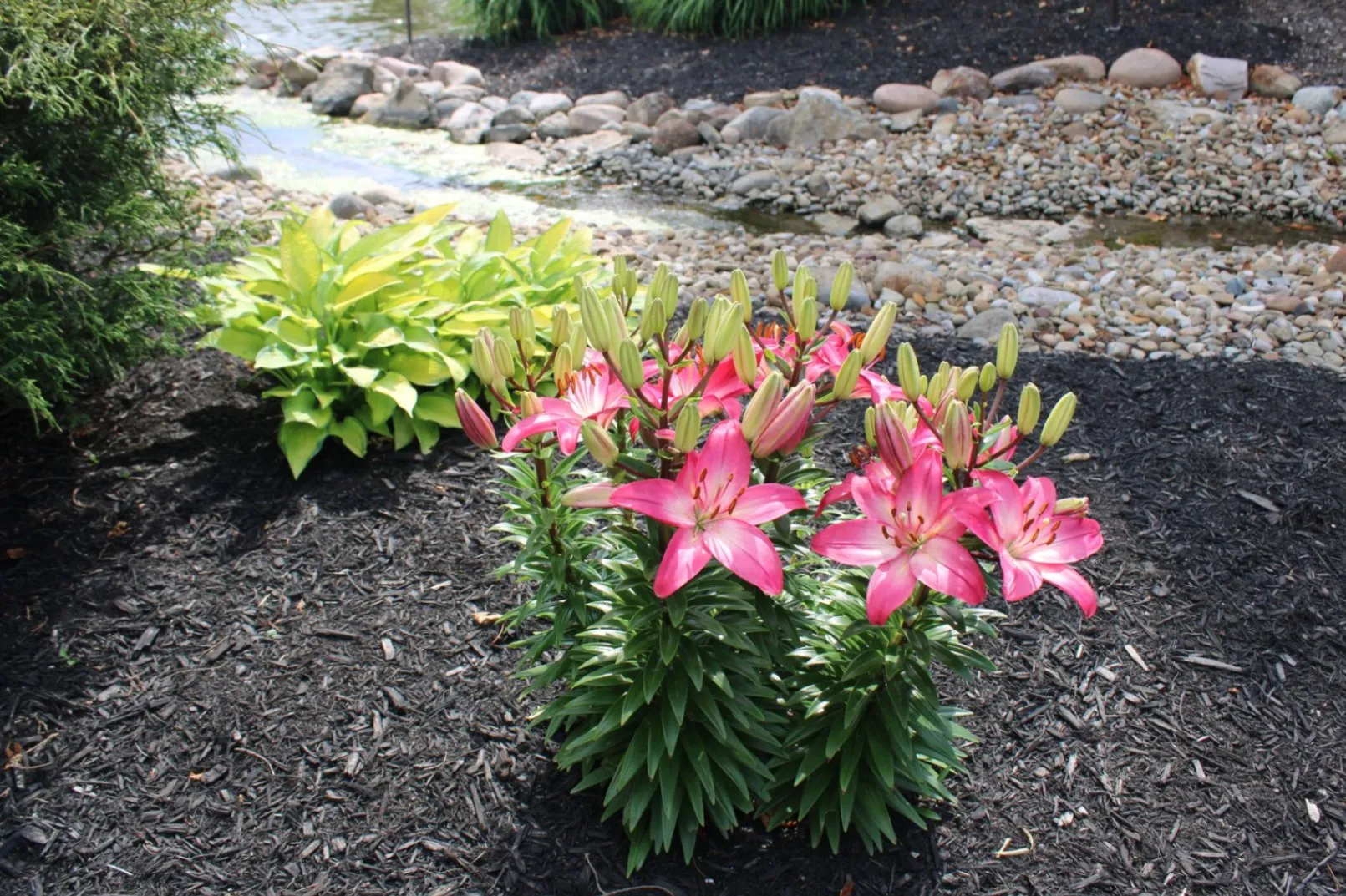
How Deep Should Mulch Be? A Spring Guide for Garden Beds
How deep should mulch be? For most garden beds, 2 to 3 inches is the right depth. That is enough to hold moisture in the soil, block most weed seeds from sprouting and keep soil temperatures steady, without smothering roots. Keep it thinner near the base of plants and pull it a few inches away from tree trunks and shrub stems.
This guide covers why depth matters, how to estimate how much mulch you need, when to apply it in spring and which type to choose.
Why does mulch depth matter?
Because both too little and too much cause problems. Mulch works as a layer, and its thickness decides what it can do.
- Less than about 2 inches: weeds push through and soil dries out faster
- 2 to 3 inches: holds moisture, suppresses weeds and keeps soil cooler in summer
- More than about 3 to 4 inches: roots can be starved of air, water may not reach the soil, and some plants grow roots up into the mulch
- Thick, wet mulch against stems can cause rot and invite pests
Fine mulches such as shredded bark pack down, so a slightly thinner layer is enough. Coarse wood chips can be a little deeper.
What is a mulch volcano, and why avoid it?
A mulch volcano is a tall cone of mulch piled against a tree trunk. It is common, and it is harmful.
- Bark that stays wet can rot and let in disease
- Rodents and insects can nest against the trunk and chew the bark
- Roots can grow up into the mulch and circle the trunk
- The tree looks tidy for a season but can decline slowly
Instead, spread mulch in a wide, flat ring around the tree, a few inches away from the trunk. The root flare, where the trunk widens at the base, should stay visible.
How much mulch do you need?
Measure the beds and do a little math. How much mulch do I need is the most common question at the garden center.
- Measure the length and width of each bed in feet and multiply to get square feet
- Add the beds together for the total area
- As a rough guide, one cubic yard of mulch covers about 100 to 160 square feet, depending on depth
- At 3 inches deep you will need more than at 2 inches
- If you are topping up last year's mulch, an inch or so may be enough
Bagged mulch is usually sold in cubic feet, and 27 cubic feet make one cubic yard. For larger properties, bulk delivery is often easier.
When should you mulch in spring?
After the soil has warmed and the beds are clean. In Connecticut, that usually means mid to late spring.
- Finish spring cleanup first: remove leaves, sticks and last year's dead stems
- Weed the beds before mulching, since mulch does not kill weeds that are already growing
- Edge the beds for a clean line along the lawn
- Wait until the soil has warmed, because mulch on cold ground keeps it cold longer
- Water dry soil before you spread the mulch
Mulching after perennials are up lets you see where they are and keep mulch off their crowns.
What is the best mulch for flower beds?
The best mulch for flower beds is one that breaks down slowly, stays in place and suits the look you want.
- Shredded hardwood or bark: holds on slopes, breaks down slowly, adds organic matter
- Wood chips: coarser, good around trees and shrubs and on paths
- Colored mulch: black, brown or red for a uniform look; ask what the dye and base wood are
- Pine bark nuggets: attractive, but light pieces can float away in heavy rain
- Compost or leaf mold: feeds the soil, but weeds can sprout in it more easily
- Stone: does not break down or feed the soil and holds heat; better for some dry areas than for flower beds
How often should mulch be refreshed?
Usually once a year, adding only what has broken down. Do not keep adding a full new layer on top of old mulch every spring, or the total depth grows too thick.
- Rake old mulch to loosen it and check the depth
- Remove matted layers that shed water
- Add enough fresh mulch to bring the depth back to 2 to 3 inches
- Keep the mulch away from trunks and stems as you go
VS Landscaping LLC offers mulching services with mulch in various colors and types, applied evenly and at the proper thickness. Its yard cleanup service covers spring and fall cleanups, and its landscaping design team plans beds and plantings.
Frequently asked questions about mulch depth
Can you put too much mulch around plants?
Yes. More than about 3 to 4 inches can keep air and water from reaching roots and keeps stems wet, which can lead to rot. Spread it evenly and keep it away from stems.
Should old mulch be removed before adding new?
Not always. Loosen the old layer and add only enough to reach the right depth. Remove it only if it is very thick, matted or moldy.
Does mulch attract termites?
Mulch can shelter insects, including termites, but it does not create an infestation by itself. Keeping a mulch-free gap along the house foundation is a common precaution.
Is it better to mulch in spring or fall?
Both work. Spring mulching helps hold moisture and block weeds for the growing season, while fall mulching protects roots over winter. Many homeowners do a main application in spring and top up in fall.
Get your beds mulched by VS Landscaping LLC
VS Landscaping LLC is a landscaping company in Danbury, CT that offers mulching, yard cleanup, landscape design, lawn aeration, irrigation service and masonry. It serves Danbury, Ridgefield, Wilton, Fairfield, New Milford, Newtown, Westport and New Canaan. To have your beds mulched this spring, call 203-448-8149 or contact VS Landscaping LLC.