How Often to Water Your Lawn in Summer in Connecticut
How often to water your lawn in summer comes down to watering deeply and less often. For an established lawn in Connecticut, one to three waterings a week that together give about an inch of water, counting rain, is a typical guideline. Water early in the morning, let the soil dry a little between waterings, and adjust for heat waves and rainy weeks rather than following a fixed schedule.
This guide explains why deep watering works, how to measure what your lawn gets, the signs of too little and too much water, and how to set an automatic system.
Why is deep, infrequent watering better?
Because it trains roots to grow deeper. Short daily sprinkling keeps only the top of the soil wet, so roots stay shallow and the lawn suffers on the first hot, dry day.
- Deep watering moistens the soil several inches down, where roots can reach it
- Deeper roots find water longer between waterings
- The soil surface dries between waterings, which discourages weeds and disease
- Fewer, longer waterings lose less to evaporation than many short ones
How much water does a lawn need in summer?
A typical figure is about an inch a week from rain and irrigation combined. How much water does a lawn need also depends on the soil, sun and grass.
- Sandy soils drain fast and may need water more often in smaller amounts
- Clay soils hold water longer but absorb it slowly, so water in cycles to avoid runoff
- Lawns in full sun need more than lawns in shade
- During heat waves, the lawn uses water faster
- After a good soaking rain, skip the next scheduled watering
A simple rain gauge in the yard tells you how much nature already provided.
What is the best time to water grass?
Early morning, roughly from before sunrise to mid-morning. The best time to water grass is when it is cool and calm.
- Less water is lost to evaporation and wind
- The grass dries during the day, which reduces fungal disease
- Water pressure is often better before peak use
- Evening watering leaves grass wet overnight, which favors disease
- Midday watering is not harmful to grass, but much of the water evaporates
How do you measure your sprinkler run time?
With a simple can test. Sprinkler run time is the only number you can control, and it is easy to measure.
- Place several straight-sided cans or cups around one zone
- Run the zone for a set time, such as 15 or 20 minutes
- Measure the water depth in each can and average the results
- Work out how long the zone needs to put down your target amount
- Repeat for each zone, since spray heads and rotors apply water at different rates
Large differences between cans show uneven coverage, which usually means heads need adjusting or a system audit.
What are the signs of underwatering and overwatering?
The lawn will tell you, if you know what to look for.
- Underwatering: blue-gray color, footprints that stay visible, grass blades curling
- Underwatering: brown, crisp patches starting on slopes and sunny areas
- Overwatering: soggy soil, puddles and runoff
- Overwatering: mushrooms, moss, fungal disease and shallow roots
- Overwatering: high water bills with no improvement in color
Can you let a lawn go dormant in summer?
Yes, many cool-season lawns can. Watering a lawn in a Connecticut summer is a choice, and dormancy is a natural way for grass to survive heat and drought.
- Dormant grass turns brown or tan but the crowns stay alive
- A small amount of water during long droughts helps keep crowns alive
- Keep traffic off dormant lawns
- The lawn greens up again when cooler, wetter weather returns
- Do not switch back and forth between watering and dormancy, which stresses the grass
Very long, severe droughts can still kill parts of a lawn, so dormancy is not risk-free.
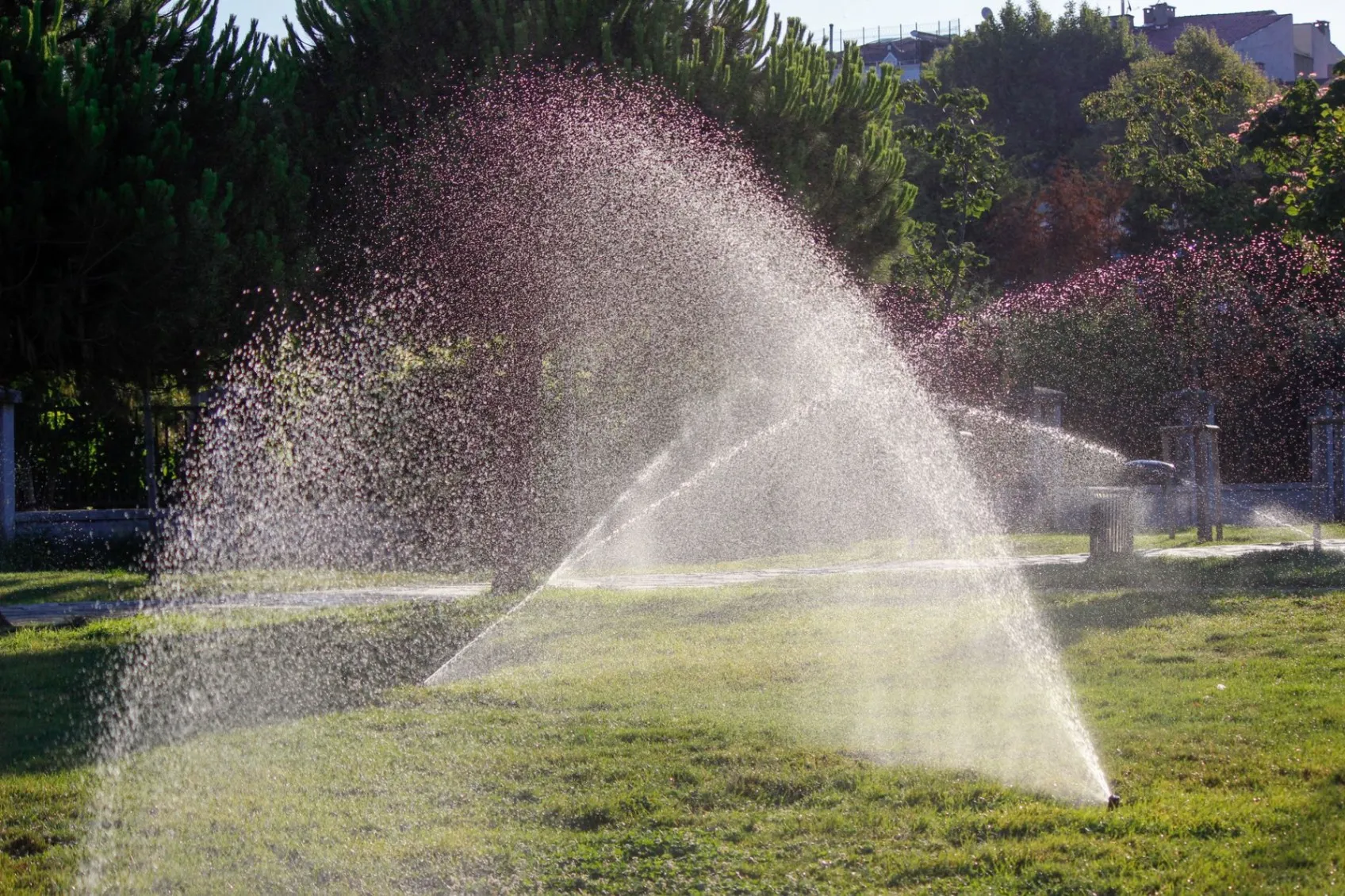
How should an automatic sprinkler system be set for summer?
Set it to water deeply and adjust it often. An automatic system is only as good as its settings.
- Use the can test results to set run times by zone
- Water two or three days a week, not every day
- Split long run times into cycles on slopes and clay to prevent runoff
- Use a rain sensor or weather-based controller to skip watering after rain
- Fix broken heads and leaks promptly, since one broken head can waste a lot of water
- Follow any watering restrictions from your town or water utility
VS Landscaping LLC offers irrigation service that includes calibration, repairs, leak detection and full system audits, and sprinkler installation for homes without a system. For new seed, see the post on how much to water new grass seed.
Frequently asked questions about watering a lawn in summer
Should I water my lawn every day in summer?
No, not an established lawn. Daily light watering keeps roots shallow. Water deeply one to three times a week, depending on rain, heat and soil.
Is it bad to water grass at night?
It is not ideal. Grass that stays wet overnight is more likely to develop fungal disease. Early morning watering is better.
How long should I run my sprinklers?
It depends on how much water each zone puts down. A can test shows how many minutes it takes each zone to apply your target amount.
Will a brown lawn come back after summer?
Usually yes, if it went dormant rather than dying. Dormant grass recovers when cooler, wetter weather returns. Pull on the grass: if it holds firm, the roots are likely alive.
Get your system tuned by VS Landscaping LLC
VS Landscaping LLC is a landscaping company in Danbury, CT that offers irrigation service, sprinkler installation, lawn aeration, yard cleanup, mulching and masonry. It serves Danbury, Ridgefield, Wilton, Fairfield, New Milford, Newtown, Westport and New Canaan. To have your sprinkler system checked for summer, call 203-448-8149 or contact VS Landscaping LLC.