What Does a Fall Yard Cleanup Include? A Full Checklist
What does a fall yard cleanup include? In most cases: removing leaves from the lawn and beds, cutting back spent perennials, clearing fallen branches and debris, a final mowing, and hauling everything away or to the curb. Aeration, overseeding, mulching, pruning and gutter cleaning are usually separate items. The exact list varies by company, so the scope should be written into the quote.
This guide lists the standard tasks, explains why leaves should not sit on the lawn all winter, covers the common extras, gives the timing for Connecticut and shows how to compare quotes.
What tasks are part of a standard fall cleanup?
A standard fall yard cleanup checklist focuses on removing what the season dropped and leaving the yard ready for snow.
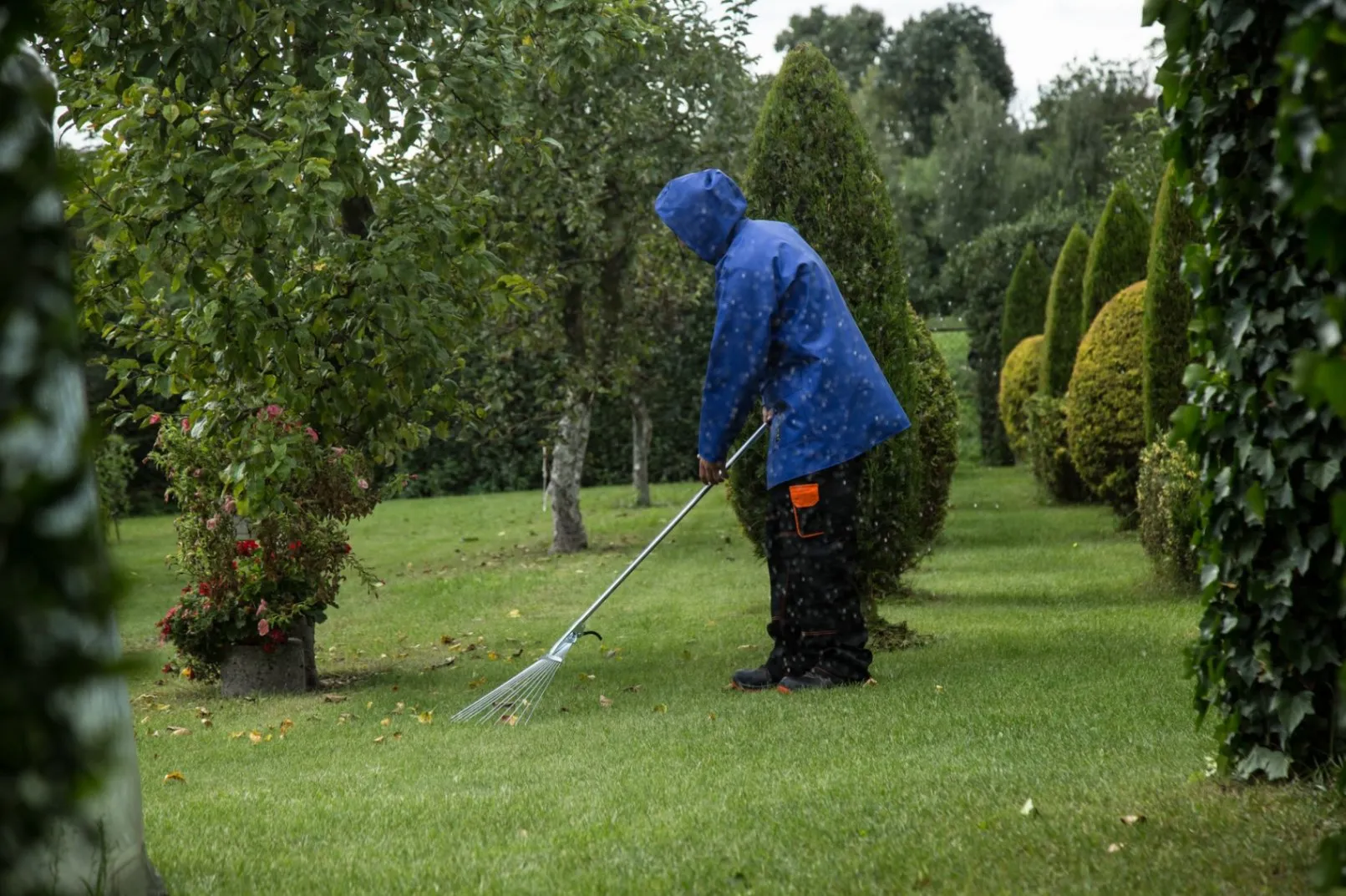
- Blowing and raking leaves from the lawn, beds, walkways, patios and driveway
- Clearing leaves from under shrubs and along fences
- Picking up fallen branches and storm debris
- Cutting back perennials that have died down
- Pulling spent annuals and weeds from beds
- A final mowing at a slightly lower height
- Edging beds if needed
- Collecting and removing the debris, or placing it for town pickup
On properties with many trees, the cleanup is often done in two or three visits, since oaks and some maples drop their leaves late.
Should you leave leaves on the lawn?
Not in a thick layer. Should you leave leaves on the lawn is a fair question, since a light scattering can be mulched with a mower and left to feed the soil. A mat of whole leaves is a different matter.
- It blocks light and air from the grass through fall and early spring
- It holds moisture against the turf, which encourages snow mold and other disease
- It smothers the grass, leaving thin or bare patches in spring
- It gives voles and other pests cover under the snow
- Wet leaves on walkways and steps are slippery
Leaves are less of a problem in wooded edges and under shrubs, where a natural layer can stay. On the lawn, on hard surfaces and against the house, they should come off.
What is usually extra in a fall cleanup?
Work that improves the lawn or the beds for next year is normally quoted separately. These are worth asking about while the crew is already scheduled.
- Core aeration, which relieves compacted soil
- Overseeding thin areas, when the timing still allows it
- Fall fertilizer
- Fresh mulch on beds
- Pruning of shrubs and small trees
- Gutter cleaning
- Shutting down the irrigation system
- Protecting sensitive shrubs with burlap
VS Landscaping LLC lists lawn aeration and mulching as services, so they can be discussed along with the cleanup.
When should a fall cleanup be done in Connecticut?
From late October through November, depending on when the trees drop their leaves, and before lasting snow. Leaf removal in Danbury, CT and nearby towns usually runs later than people expect, because oaks hold their leaves into late fall.
- A first visit when most leaves are down keeps the lawn from being smothered
- A final visit after the last trees drop finishes the job
- Do the final mowing while the grass is still growing slowly
- Finish before the ground is covered by snow, since wet, frozen leaves are much harder to remove
- Check your town's schedule and rules for curbside leaf collection or drop-off
If snow arrives before the cleanup is finished, the remaining leaves can be removed during a thaw or first thing in spring.
What should you check yourself before winter?
A few items fall outside most cleanups and are easy to forget.
- Gutters and downspouts, which should be clear before freezing weather
- Yard drains and the area around the foundation
- Hoses, which should be disconnected and drained
- Outdoor furniture, pots and tools that need to be stored
- Dead or hanging branches over the driveway, roof or walkways
- Stakes marking driveway edges and beds before plowing starts
Mention anything you want handled when you request the quote, so it can be included or declined in writing.
How do you compare fall cleanup quotes?
Compare the scope first and the price second. Two quotes with the same label can describe very different amounts of work.
- Which areas are included: lawn only, or beds, woods edge and hard surfaces too?
- How many visits are planned?
- Are perennials cut back?
- Is debris hauled away, or left at the curb?
- Is the final mowing included?
- What happens if snow comes early?
The company's yard cleanup service page is the place to start a request, and a walk of the property with the estimator makes the scope clear for both sides.
Frequently asked questions about fall yard cleanup
Is a fall cleanup worth it?
For lawns under trees, yes. Removing the leaf layer before winter prevents dead patches and disease in spring, and it clears walkways and drains before snow. Yards with few trees may only need a final mowing and a quick tidy.
Can leaves be mulched instead of removed?
A light layer can be chopped finely with a mulching mower and left on the lawn. When the leaves are deep enough to hide the grass, they should be collected, or mulched and removed in part.
Should perennials be cut back in fall or spring?
Either works for many plants. Cutting back in fall leaves beds neat and removes diseased foliage. Some gardeners leave seed heads and stems for winter interest and wildlife and cut them in early spring.
How long does a fall cleanup take?
It depends on the size of the property and the number of trees. A small yard can take a crew a couple of hours, and a large wooded lot can take most of a day or more than one visit.
Schedule a fall cleanup with VS Landscaping LLC
VS Landscaping LLC is a landscaping company in Danbury, CT that offers yard cleanup, lawn aeration, mulching, landscape design, masonry and irrigation service. It serves Danbury, Ridgefield, Wilton, Fairfield, New Milford, Newtown and New Canaan. To request a cleanup before winter, call 203-448-8149 or contact VS Landscaping LLC.