When to Aerate a Lawn in Connecticut: Fall or Spring?
When to aerate a lawn in Connecticut has a clear answer for most yards: late summer to early fall, roughly from late August through early October. Lawns here are cool-season grasses that grow hardest in the cool, moist weeks of fall, so they heal quickly and fill the holes with new roots. Spring is the second choice. Midsummer heat and frozen or soggy ground are the times to avoid.
This guide explains why fall works best, how to tell whether your lawn needs it, how to prepare, and what to do in the weeks after.
Why is early fall the best time to aerate in Connecticut?
Because the grass is growing and the weeds are not. Kentucky bluegrass, fescues and perennial ryegrass, the usual lawn grasses in Connecticut, put most of their root growth into fall.
- The soil is still warm from summer, which helps roots and seed
- Air temperatures are cooler, so the lawn is not stressed by heat
- Rain is usually more regular than in July and August
- Crabgrass and other summer annual weeds are finishing their season and will not take over the open holes
- There are still several weeks of growth before the ground freezes
The aim is to aerate early enough that the lawn, and any new seed, has about a month or more of growing weather afterward.
Can you aerate a lawn in spring?
Yes, when fall was missed or the soil is badly compacted. Spring aeration works, with two drawbacks.
- Open soil in spring gives crabgrass seed a place to sprout
- Aerating can disturb a crabgrass pre-emergent that was already applied
- Summer heat arrives before new roots are fully established
- The ground is often too wet early in the season
If you aerate in spring, wait until the lawn is actively growing and has been mowed a couple of times, and the soil is moist but not muddy.
What are the signs your lawn needs aeration?
Compaction shows in how the soil takes water and how the grass responds. The signs your lawn needs aeration are easy to check.
- Water puddles or runs off instead of soaking in
- A screwdriver is hard to push a few inches into moist soil
- Thin or bare areas where people, pets or vehicles travel
- The lawn dries out and browns faster than the neighbors' in summer
- A spongy layer of thatch more than about half an inch thick
- Heavy clay soil, or a lawn installed over soil compacted during construction
Cut out a small wedge of turf a few inches deep. Roots that stop within the first inch or two are a good sign the soil below is too tight.
What is core aeration, and how is it different from spiking?
Core aeration removes small plugs of soil and leaves them on the surface. That creates open channels for air, water and nutrients and gives the surrounding soil room to loosen.
- Core or plug aerators pull cores a few inches deep and are the method that relieves compaction
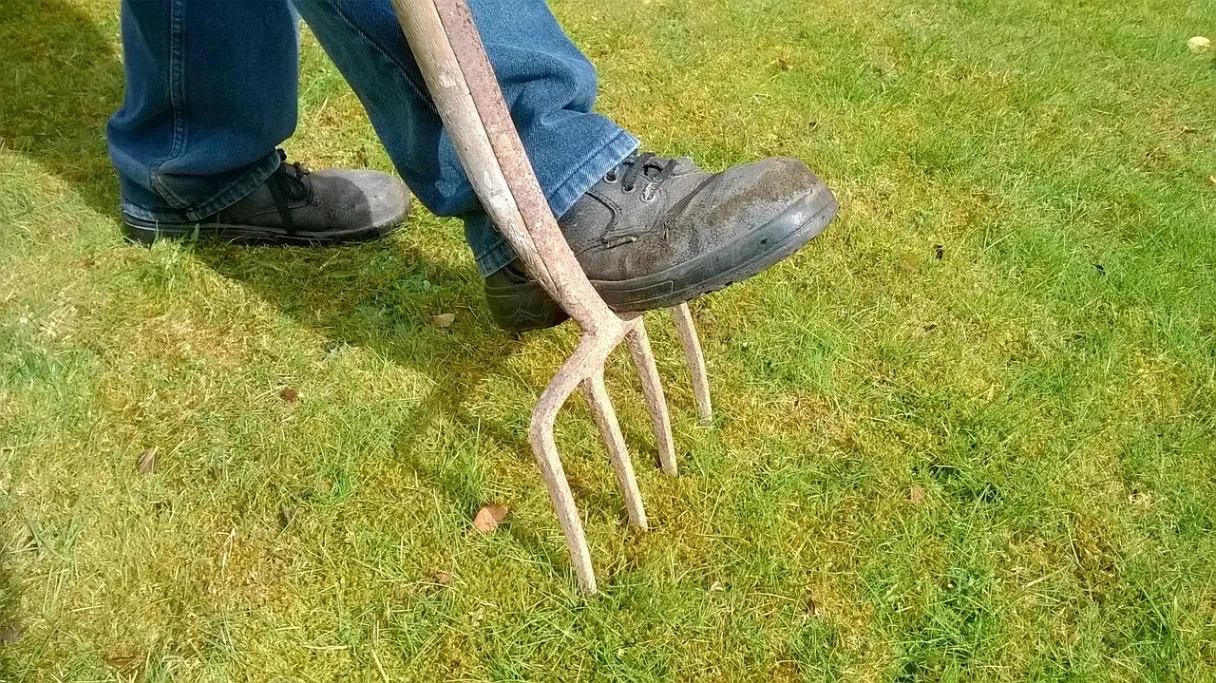
- Spike aerators and spiked shoes only poke holes, pressing the soil sideways, which can make compaction worse around each hole
- Two passes in different directions give better coverage on a compacted lawn
- The plugs break down in a week or two with rain and mowing and return soil to the surface
Leave the plugs where they fall. Raking them up removes the soil and microbes that help break down thatch.
How should you prepare the lawn?
Moist soil and marked obstacles make the job go well.
- Water the lawn the day before if it has not rained, so the tines can pull full cores
- Mow a little shorter than usual
- Mark sprinkler heads, shallow irrigation lines, invisible dog fence wire and landscape lighting cable
- Clear leaves, sticks and toys
- Avoid aerating soil that is saturated, since the cores smear and the machine ruts the lawn
Sprinkler heads are the most common casualty. If you have a system, flag every head before the machine arrives.
What should you do after aerating?
Take advantage of the open soil. The weeks after aeration are the best time of the year to thicken a lawn.
- Overseed right away: the holes hold seed against the soil, which is why many homeowners aerate and overseed in fall together
- Apply a fertilizer suited to the season, and a starter type if you seeded
- Keep the surface moist with light, frequent watering until the new grass is up, then water less often and deeper
- Hold off on weed control products until new grass has been mowed several times
- Keep mowing at normal height once the grass needs it
- Keep fallen leaves from matting over new seedlings
VS Landscaping LLC describes its lawn aeration service as core aeration that breaks up compacted soil so air, water and nutrients reach the roots. Ask whether overseeding can be done on the same visit. The company also offers irrigation service, useful for keeping new seed watered, and a yard cleanup service for the leaves that follow.
Frequently asked questions about aerating a lawn in Connecticut
How often should you aerate a lawn?
For most lawns, once a year in fall is enough, and a healthy lawn on loose soil may need it only every two or three years. How often to aerate a lawn depends on traffic and soil type: clay soil and heavily used yards benefit from yearly aeration.
Is October too late to aerate in Connecticut?
Early October usually still works for aeration alone. For overseeding, earlier is better, because new grass needs several weeks of mild weather before the ground gets cold. Later in the month the result depends on the season.
Should you aerate before or after seeding?
Before. Aerating first opens the soil so seed falls into and around the holes, which improves contact and germination. Aerating after seeding would disturb the seed.
Can you aerate a new lawn?
Wait until it is established. A lawn seeded or sodded within the past year has shallow roots that the machine can tear out, so give it a full growing season first.
Schedule lawn aeration with VS Landscaping LLC
VS Landscaping LLC is a landscaping company in Danbury, CT that offers lawn aeration, yard cleanup, mulching, irrigation service, sprinkler installation and landscape design. It serves Danbury, Ridgefield, Wilton, Fairfield, New Milford, Newtown and Westport. To ask about aerating your lawn this fall, call 203-448-8149 or contact VS Landscaping LLC.