Why Do Retaining Walls Fail? Causes, Signs and Fixes
Why do retaining walls fail? Most often because of water. When rain and snowmelt cannot drain out from behind a wall, the soil gets heavier and pushes harder, and the wall starts to lean, bulge or crack. A weak base, frost, a wall built taller than its design allows and extra weight at the top cause most of the remaining failures. Many are preventable at construction, and some can be repaired if caught early.
This guide covers the main causes, the warning signs to watch in your yard, what a durable wall includes, and how to decide between repair and rebuilding.
What makes water the main cause of wall failure?
Water adds weight and pressure behind the wall. Saturated soil pushes much harder than dry soil, and a wall without drainage has to hold back all of it.
- No gravel backfill behind the wall to let water move down
- No drain pipe at the base to carry water away
- Weep holes or outlets that are missing or clogged
- Downspouts or a sloped driveway sending extra water toward the wall
- Clay soil behind the wall that holds water instead of draining it
Retaining wall drainage is the part homeowners never see, and the part that most decides how long a wall lasts.
How does a weak base cause a wall to fail?
The base carries the whole wall. If it settles unevenly, the wall tilts or cracks above it.
- Blocks or stones set directly on soil instead of a compacted gravel base
- A base that is too shallow or too narrow for the wall height
- Soft or fill soil that was not compacted
- Base material washed out by water running under the wall
A wall that is out of level along its bottom course usually has a base problem.
Does frost damage retaining walls in Connecticut?
It can. Water that freezes in the soil expands and pushes on the wall, then the soil settles as it thaws. Frost heave in a retaining wall shows as blocks pushed out of line or a wall that moves a little more each winter.
- Wet soil behind the wall freezes and expands
- Good drainage keeps the soil behind the wall drier, so there is less to freeze
- Rigid mortared walls can crack where dry-laid walls might shift
- Late-summer and fall are good times to fix drainage before winter
What other causes should you know about?
Design and loads. A wall must be built for what it holds back and what sits on top of it.
- A wall built taller than its block system or design allows
- No setback, so the wall stands straight up instead of leaning slightly into the hill
- Missing reinforcement on taller walls
- Vehicles, sheds, pools or patios added near the top of the wall after it was built
- Tree roots growing behind or under the wall
- Timber walls rotting where wood touches the soil
What are the warning signs of a failing wall?
Check walls after heavy rain and in spring after the thaw. Note any change from one season to the next.
- A retaining wall leaning forward, or leaning more than it used to
- Bulges in the face of the wall
- Cracks, especially ones that are widening
- Blocks or stones that have slid out of line or fallen
- Soil, water or fine material seeping through the face
- Sinking ground or gaps behind the top of the wall
- Water pooling at the base after storms
One small crack in an old mortared wall may be cosmetic. Leaning, bulging and moving blocks need a professional look.
Can a failing retaining wall be repaired?
Sometimes. Whether to repair or rebuild a retaining wall depends on what failed and how far it has gone.
- Clogged weep holes or a blocked drain can sometimes be cleared
- Redirecting downspouts and surface water can relieve pressure
- A small section that slid out may be reset if the base is sound
- A wall that leans along its length or has a failed base usually needs rebuilding
- Rebuilding gives a chance to add proper drainage and a correct base
Taller walls, walls holding up driveways or structures, and walls near property lines may need an engineered design or a permit, so check with your town before work begins. Call 811 before digging.
What does a well-built retaining wall include?
A good wall is mostly what is underground and behind it.
- A compacted gravel base at the right depth
- Gravel backfill and a perforated drain pipe behind the wall
- A slight backward lean into the hill
- Reinforcement where the height and load require it
- A plan for surface water at the top of the wall
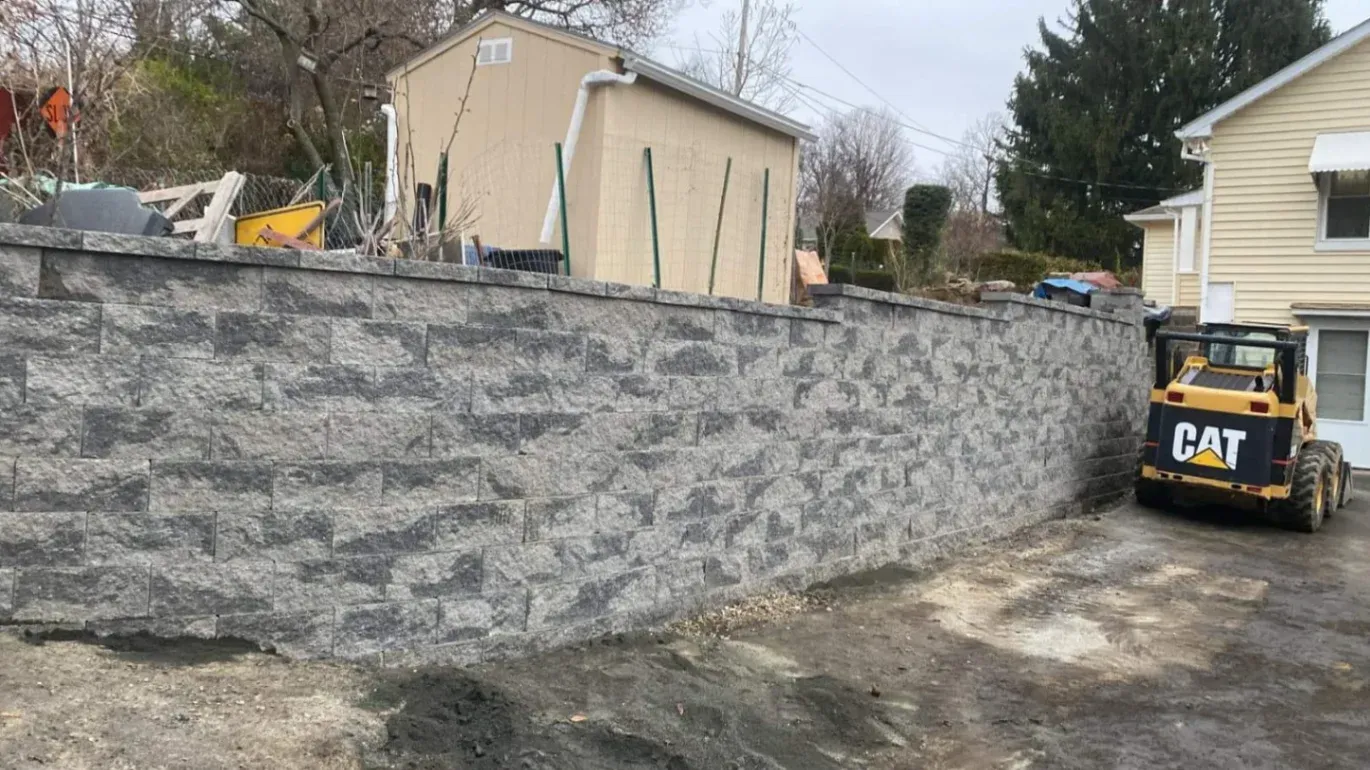
VS Landscaping LLC builds retaining walls with professional-grade blocks and natural stone, and states that every wall it builds is designed for proper drainage and pressure resistance. Its masonry work covers stone, brick and block structures. For budget options, see the post on inexpensive retaining wall ideas.
Frequently asked questions about retaining wall failure
Is a leaning retaining wall dangerous?
It can be. A wall that leans, bulges or moves can collapse, especially after heavy rain or a thaw. Keep people away from the base and have it inspected soon.
How long should a retaining wall last?
A well-built stone or block wall can last for decades, while timber walls typically have a shorter life. Drainage, base and design matter more than the material alone.
Can I fix a leaning retaining wall myself?
Small garden walls can sometimes be reset by a handy homeowner. Larger walls, or walls supporting a driveway or structure, should be assessed by a professional.
Why is water coming through my retaining wall?
Water seeping through the face means it is building up behind the wall. Some walls have outlets for that purpose, but seepage from cracks or joints often points to missing or clogged drainage.
Have your wall checked by VS Landscaping LLC
VS Landscaping LLC is a landscaping and masonry company in Danbury, CT that builds retaining walls, patios and other masonry, and offers landscape design, irrigation and yard care. It serves Danbury, Ridgefield, Wilton, Fairfield, New Milford, Newtown, Westport and New Canaan. Ask whether your wall can be repaired or should be rebuilt. Call 203-448-8149 or contact VS Landscaping LLC.